
The Wheel of the Year: Eight Festivals, Explained Simply
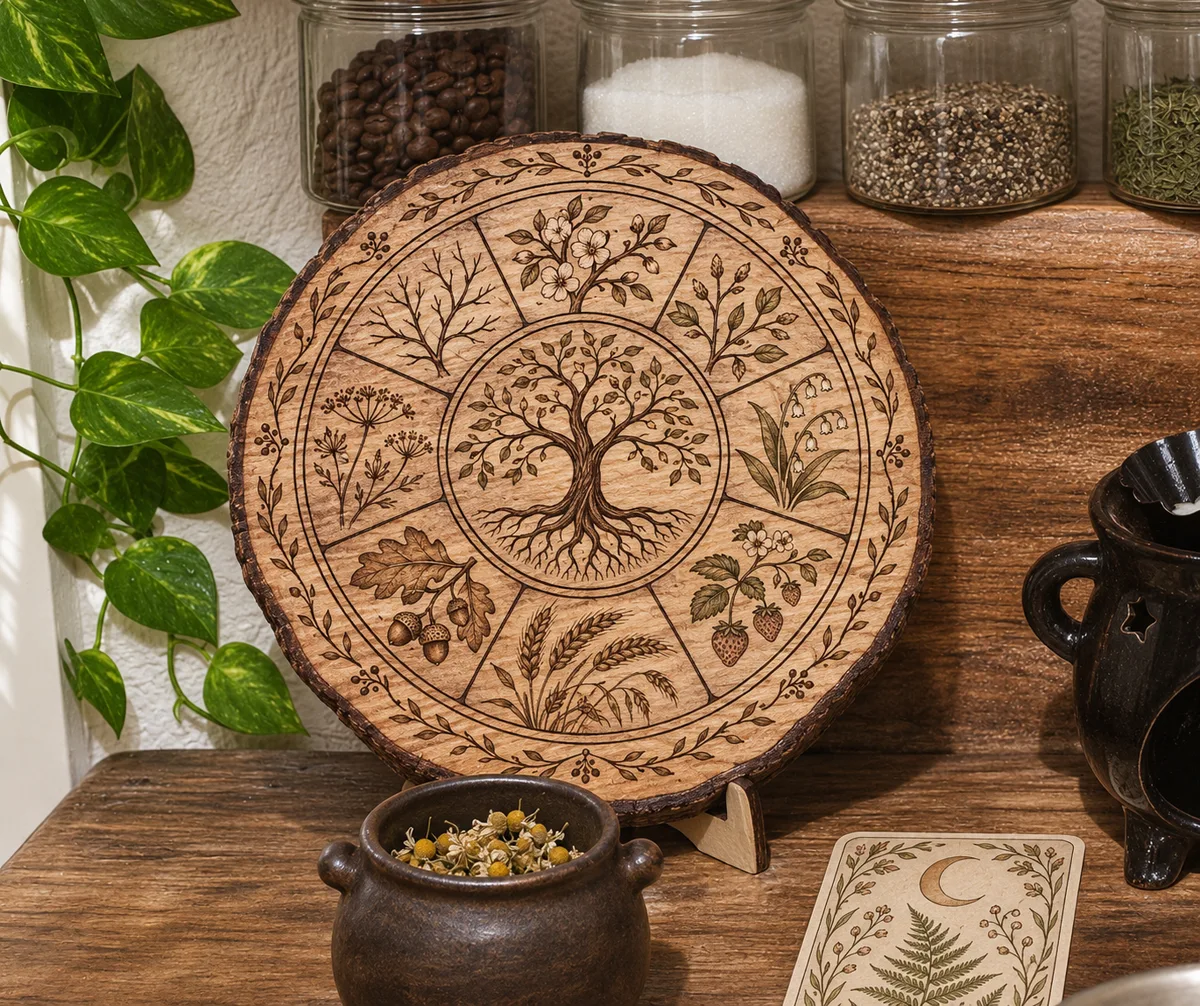
Behind the candle on my ritual table there is a round wooden plaque with a tree of life at its centre. Around it are suns, snowflakes and leaves for the seasons. It is my Wheel of the Year, the cycle of eight festivals that many modern witches follow. Once you know them, the year starts to feel less like a straight line and more like a circle you can rest in.
The eight festivals
Dates are for the Northern Hemisphere. In the Southern Hemisphere, the wheel turns the other way round.
- Samhain (31 October): the start of the dark half of the year. Remembering ancestors and letting go.
- Yule (winter solstice, around 21 December): the longest night and the return of the light. Rest and hope.
- Imbolc (1 February): first stirrings of spring. Cleansing and new intentions.
- Ostara (spring equinox, around 20 March): balance and growth. Planting, literally or not.
- Beltane (1 May): fertility, passion and celebration.
- Litha (summer solstice, around 21 June): the longest day. Confidence and full power.
- Lughnasadh (1 August): the first harvest. Gratitude for your work.
- Mabon (autumn equinox, around 22 September): balance again, and the second harvest.
How to begin
Don’t try to celebrate all eight perfectly in your first year. Pick the next one coming up and do one small thing: light a candle, take a walk, cook a seasonal meal or write in your journal. Next year, add another.
Why the wheel helps
Following the wheel gives you eight natural moments a year to pause, take stock and begin again. Nobody gets the year right in one go, and the wheel reminds you that another season is always coming.
Whenever you’re at the start of a new turn of your own wheel, my fresh start rituals are there to mark it. They are cast the same day, at the table where the wheel hangs.
Rituals I cast for this
Cast the same day at my table, with ritual photos included and a reply to any question within 24 hours.
Road Opener Spell
Fresh starts, clarity & open possibilities
Fresh Start Spell