
Reading Tarot Intuitively, Without Memorising the Guidebook
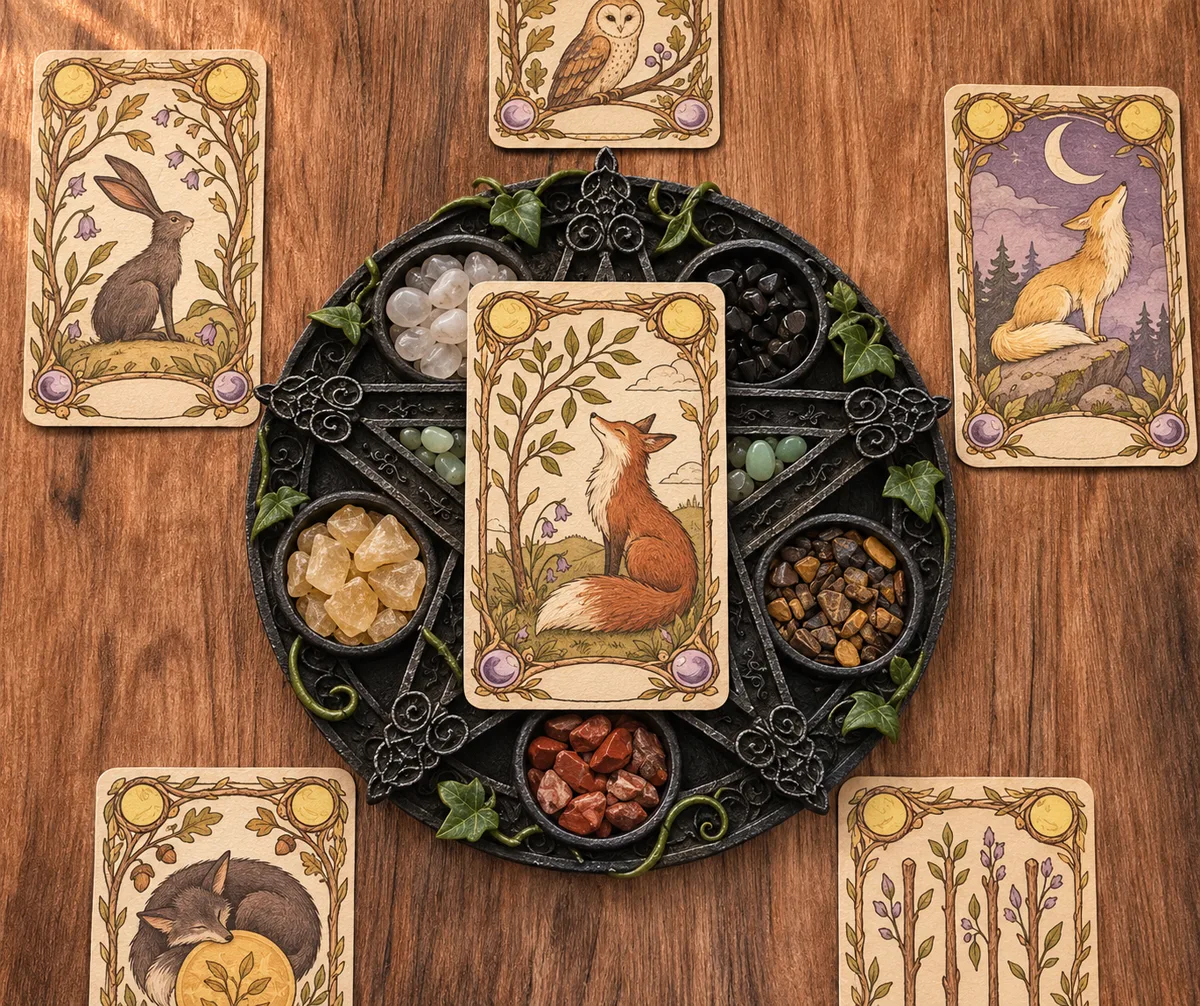
The deck in my ritual photographs is illustrated with cats: a cat queen holding a coin, a cat gazing at a starry window, a little witch-hatted cat stirring a cauldron. I chose it because I can read it from the pictures alone, and that is how I suggest beginners start too.
Why does intuitive reading work?
Tarot images were designed to tell stories. Before you learn any official meaning, you can already see whether a card feels busy or calm, hopeful or tense. That first impression is real information about how you’re approaching your question.
A standard deck has 78 cards: 22 Major Arcana, with big archetypal figures such as the Fool, the Emperor and the Tower, and 56 Minor Arcana in four suits, according to the Victoria and Albert Museum. Most modern decks, including mine, follow the Rider-Waite-Smith system, designed by the artist Pamela Colman Smith, so every card has a picture to read.
How do I start a one-card daily practice?
- Shuffle while thinking about your day.
- Draw one card.
- Describe what you see in three sentences, as if to a friend who can’t see it. “A woman sits alone holding a cup. She looks content but a bit closed off. The sky behind her is grey.”
- Ask: where in my day might this show up?
- Only then, if you’re curious, read the guidebook meaning and see how it compares.
Write it down. Within a month you’ll know thirty cards by heart, through your own experience rather than memorisation. A simple notebook works; my beginner grimoire guide shows one way to set it up.
What should I look for in a card?
- Faces and bodies: is the figure relaxed, tense, turned away, reaching out?
- Weather and sky: bright, stormy, night-time?
- Movement: is anything changing, falling, arriving, leaving?
- Colour: warm and lively, or cool and still?
- Your own reaction: do you like this card, or want to put it back? Both tell you something.
What is a simple spread to try next?
Once one card feels easy, try three cards in a row:
| Position | Ask |
|---|---|
| 1 | What is the situation now? |
| 2 | What is in the way, or what am I missing? |
| 3 | What would help? |
Read each card from its picture first, then look at how the three images talk to each other: does the mood brighten from left to right, or darken?
What about reversed cards?
A card that comes out upside down is called reversed. Readers use reversals in different ways: some read them as the card’s energy being blocked, delayed or turned inward; others ignore them and turn every card upright. As a beginner, you can safely leave reversals out until upright cards feel familiar. When you do start, read the picture the same way: an upside-down figure often feels unsettled, stuck or inward-looking, and that feeling is a good first clue.
How often should I read for myself?
One card a day is plenty while you learn. Drawing again and again on the same question, hoping for a different answer, tends to add confusion rather than clarity. If a reading unsettles you, put the cards away, write down what you felt and come back to it the next day.
How do I choose a deck?
If a deck’s art leaves you cold, intuitive reading gets hard. There are thousands of decks, with cats, botanicals, modern people and minimal line art. Pick the one you want to look at every day. For a first deck, one based on the Rider-Waite-Smith system makes it easier to compare your impressions with books and guides.
What can and can’t tarot do?
Tarot is a mirror for reflection. It suggests themes and possibilities; it doesn’t fix the future or reveal another person’s private thoughts with certainty. Your choices still shape what happens.
Can I get a reading from your table?
If you’d like a reading done for you, my tarot readings include a photograph of your spread on my table and a written interpretation you can return to. I explain how they work in tarot readings online. You might also enjoy my clarity rituals.
Questions people also ask
Do I need to memorise all 78 tarot meanings?
No. Start from the pictures, one card a day, and compare your impressions with the guidebook afterwards. You will learn the meanings naturally over time.
What is the best tarot deck for beginners?
One whose art you enjoy looking at. A deck based on the Rider-Waite-Smith system makes it easier to compare your readings with books and guides.
What is a good first tarot spread?
Three cards in a row: the situation now, what is in the way, and what would help.
Should beginners read reversed tarot cards?
You do not have to. Many readers turn every card upright while they learn, and add reversals once the upright meanings feel familiar.
Can tarot predict the future?
Tarot suggests themes and possibilities. It does not fix the future, and your choices still shape what happens.
Sources
- Tarot cards, Victoria and Albert Museum
Keep reading
Rituals I cast for this
Cast the same day at my table, with ritual photos included and a reply to any question within 24 hours.
Soul Contract Tarot Reading
Relationship patterns, lessons & reflection